Polish Christmas Traditions: Wigilia, 12 Dishes and How to Say Merry Christmas in Polish
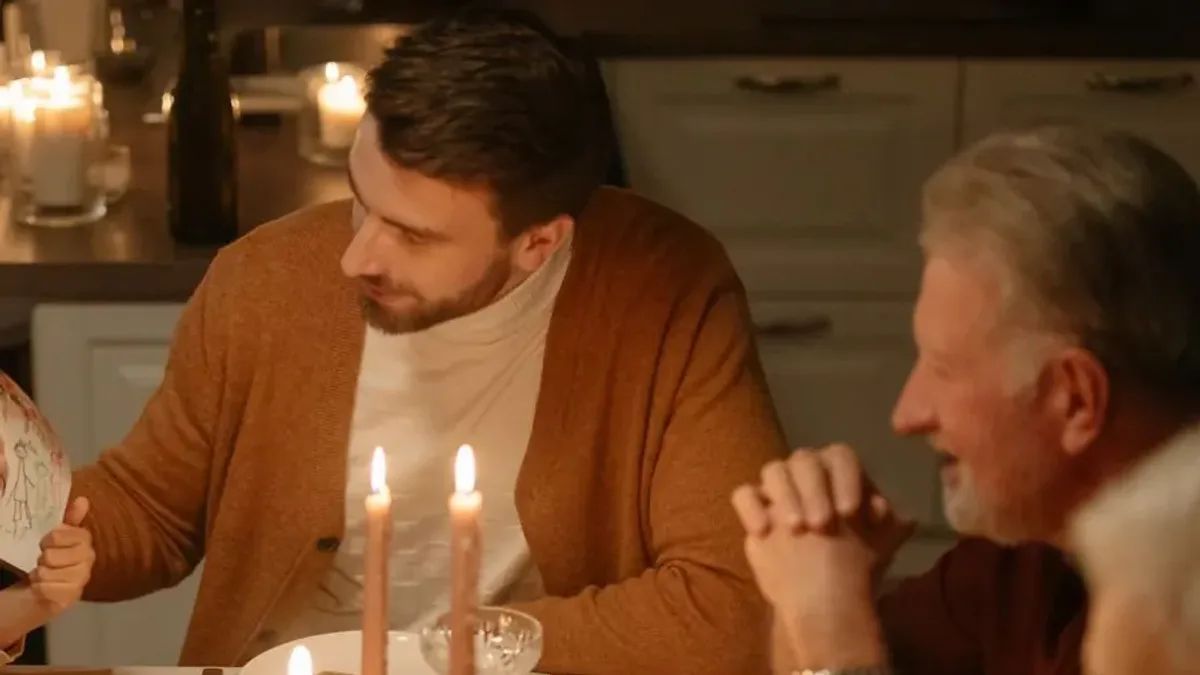
Every December the same two questions land in my inbox: how do you say Merry Christmas in Polish, and what exactly happens at a Polish Wigilia? I grew up in Wrocław, where Christmas Eve is the one evening of the year when nobody is late for supper, so this is the guide I wish I could hand to every partner, friend and new colleague of a Polish family before 24 December – the greetings, the twelve dishes, the customs and the words you will hear at the table.
In short
Merry Christmas in Polish is Wesołych Świąt! (veh-SO-wikh shfyont). Wigilia is the Christmas Eve supper on 24 December: the family waits for the first star, shares opłatek (a thin white wafer) with wishes, eats twelve meatless dishes and opens presents straight after supper – not on Christmas morning.
How do you say Merry Christmas in Polish?
Merry Christmas in Polish is Wesołych Świąt! (veh-SO-wikh shfyont), literally “merry holidays”. It works everywhere – with your in-laws, your boss and the cashier at Biedronka. The full, more formal version is Wesołych Świąt Bożego Narodzenia!, and the classic card line adds the New Year: Wesołych Świąt i szczęśliwego Nowego Roku! If someone wishes you first, answer Nawzajem! (nav-ZA-yem) – “likewise” – or simply repeat the wish.
A small grammar note, because my students always ask: why wesołych and not wesołe? Polish wishes hide the verb życzyć (to wish), which takes the genitive case – the full sentence is Życzę ci wesołych Świąt, “I wish you merry holidays”. That is why the adjectives in every wish end in -ych or -ego. In the respellings, capitals mark the stressed syllable – in Polish it is almost always the second-to-last one – “kh” is the rough “h” of Scottish “loch”, and w next to a voiceless consonant sounds like f: Świąt = shfyont.
| Polish | Say it like | When to use it |
|---|---|---|
| Wesołych Świąt! | veh-SO-wikh shfyont | The everyday “Merry Christmas” – to anyone, spoken or written. |
| Wesołych Świąt Bożego Narodzenia! | veh-SO-wikh shfyont bo-ZHEH-go na-ro-DZEN-ya | The full version – cards, emails and the little speech while sharing opłatek. |
| Szczęśliwego Nowego Roku! | shchen-shlee-VEH-go no-VEH-go RO-koo | Happy New Year – on its own from after Christmas into early January; before Christmas, combined with Wesołych Świąt. |
| Wesołych Świąt i szczęśliwego Nowego Roku! | veh-SO-wikh shfyont ee shchen-shlee-VEH-go no-VEH-go RO-koo | Merry Christmas and a Happy New Year – the standard card line. |
| Zdrowych i spokojnych Świąt! | ZDRO-vikh ee spo-KOY-nikh shfyont | “Healthy and peaceful holidays” – warmer and more personal, perfect for older relatives. |
| Wszystkiego najlepszego z okazji Świąt! | fshist-KYEH-go nai-lep-SHEH-go z o-KA-zyee shfyont | “All the best for the holidays” – neutral, good for colleagues and neighbours. |
What to write in a Polish Christmas card
Polish cards are short and warm. A natural text looks like this: Kochani! Wesołych Świąt Bożego Narodzenia i szczęśliwego Nowego Roku! Dużo zdrowia, miłości i spokoju życzy Tom. – “My dears! Merry Christmas and a Happy New Year! Lots of health, love and peace, wishes Tom.” Yes, the name comes last: życzy Tom, “wishes Tom”, is how Poles sign their cards. Kochani and miłości are for family and close friends. For a colleague or a neighbour, open with Drodzy Państwo! (the polite “Dear all”, for a couple or a family) or Droga Aniu! (“Dear Ania”, to one person) and write Spokojnych i radosnych Świąt oraz wszystkiego najlepszego w Nowym Roku życzy Tom. – “Peaceful and joyful holidays and all the best in the New Year, wishes Tom.” Writing to your Polish partner? You may also want my post on how to say I love you in Polish.
What is Wigilia?
Wigilia (vee-GEE-lya) is the Polish Christmas Eve supper on 24 December, and for most Poles it is the heart of the whole Christmas – more important than Christmas Day itself. The family waits for the first star, shares opłatek with wishes, sits down to twelve meatless dishes, opens presents after supper and, in many homes, ends the night at Pasterka, the midnight Mass. The word comes from the Latin vigilia, “a vigil” – a day of waiting before the feast. The Polish government’s study portal has a good overview of Polish Christmas traditions; here is how the evening feels from the inside.
The first star (pierwsza gwiazdka)
Supper does not start at a fixed hour – it starts when the first star appears in the sky, in memory of the Star of Bethlehem. Watching for it is the children’s job, and in a Polish December that is usually around four in the afternoon. In most families somebody “spots” it suspiciously early, just as the soup is ready.
Hay under the tablecloth and the extra plate
Under the white tablecloth there is a handful of hay (sianko), a reminder of the manger. The table is set for one more person than will eat: the extra plate is for an unexpected guest, because nobody should be alone on Christmas Eve – and quietly also for the family members who are no longer there. In a 2023 CBOS survey quoted by Notes from Poland, 83% of Poles said they still set that extra place.
Sharing opłatek
Before anyone sits down, each person takes a piece of opłatek – a thin, white, unleavened wafer, often embossed with a nativity scene – and goes round the room. You break a corner off the other person’s wafer, they break a corner off yours, and you exchange wishes: health, happiness, a new job, a baby. This is the moment when Polish families say the things they do not say out loud the rest of the year, so expect hugs and a few tears – according to CBOS, 97% of Poles take part. If you say only one thing in Polish all evening, say it here: Wesołych Świąt, dużo zdrowia i szczęścia! – “Merry Christmas, lots of health and happiness!”
No meat – but carp
Wigilia is meatless: no pork, no poultry, no beef. Fish is allowed, which is why karp (carp) is on almost every table – fried in breadcrumbs or set in jelly – next to herring in oil and herring in sour cream. Carp is a surprisingly young tradition: before the Second World War pike, zander and other freshwater fish were just as common, and it was the post-war state, pushing cheap farmed carp, that put it on every table (Culture.pl tells the whole story). The famous live carp in the bathtub is dying out – many shops no longer sell live fish – but every Polish adult has a childhood memory of it.
Presents and Pasterka
Presents are opened on Christmas Eve, straight after supper – not on Christmas morning. Who brings them depends on the region: Święty Mikołaj (Saint Nicholas) in most of Poland, Gwiazdor (the Star Man) in Greater Poland, Aniołek (the Little Angel) around Kraków and the south, Dzieciątko (the Baby Jesus) in Silesia. Then the carols start, and at midnight many families walk to Pasterka, the Shepherds’ Mass. Between the presents and the Mass there is one more, very modern ritual: Kevin sam w domu – Home Alone – which Polsat has shown every Christmas for over twenty years to around four million viewers.
What are the 12 dishes of Wigilia?
A traditional Wigilia table holds twelve dishes – one for each apostle or, in the other popular explanation, one for each month of the coming year – and you are supposed to try every one, or that dish will be missing from your life next year. All twelve are meatless. The exact list changes from region to region and from family to family, but at a table anywhere in Poland you will meet most of these:
| Polish name | Say it like | What it is |
|---|---|---|
| barszcz czerwony z uszkami | barshch cher-VO-nih z oosh-KA-mee | Clear beetroot soup with tiny mushroom-filled dumplings – “little ears”. |
| zupa grzybowa | ZOO-pa gzhih-BO-va | Wild mushroom soup, usually from dried forest mushrooms. |
| pierogi z kapustą i grzybami | pye-RO-gee s ka-POOS-tom ee gzhih-BA-mee | Dumplings filled with sauerkraut and mushrooms. |
| karp | karp | Carp – fried in breadcrumbs, or w galarecie, in jelly. |
| śledź | shlech | Herring – in oil with onion, or in sour cream. |
| kapusta z grochem | ka-POOS-ta z GRO-khem | Sauerkraut stewed with split peas. |
| kutia | KOO-tya | Wheat berries with poppy seeds, honey, nuts and dried fruit – eastern Poland. |
| makowiec | ma-KO-vyets | Poppy seed roll. |
| piernik | PYER-neek | Gingerbread – a spiced cake or small biscuits. |
| kompot z suszu | KOM-pot s SOO-shoo | A smoky drink made from dried apples, pears and plums. |
| łazanki z kapustą | wa-ZAN-kee s ka-POOS-tom | Small square pasta with cabbage and mushrooms. |
| ryba po grecku | RIH-ba po GRETS-koo | “Greek-style” fish: fried fish under a carrot-and-tomato sauce, eaten cold. Nothing Greek about it. |
Regional differences are real. In Silesia you will be served moczka (a sweet gingerbread-and-dried-fruit sauce) and makówki (poppy seeds layered with bread rolls and milk), in Greater Poland makiełki (poppy seeds with noodles), while kutia belongs to the east and to families with roots in today’s Ukraine, Belarus and Lithuania. Families count generously – the bread, the kompot and the dessert all count – and the dishes come in waves, so nobody minds if you take a break between the soup and the pierogi.
Polish Christmas vocabulary: 30 words you will hear
These are the words that come up at every Polish Christmas, from the tree to the midnight Mass. Capitals mark the stressed syllable.
| Polish | Say it like | English |
|---|---|---|
| Boże Narodzenie | BO-zheh na-ro-DZEN-yeh | Christmas (literally “God’s birth”) |
| święta | SHFYEN-ta | the holidays – Christmas or Easter |
| Wigilia | vee-GEE-lya | Christmas Eve and the Christmas Eve supper |
| choinka | kho-EEN-ka | Christmas tree |
| bombka | BOMP-ka | bauble |
| lampki | LAMP-kee | fairy lights |
| łańcuch | WAN-tsookh | paper chain or garland for the tree |
| aniołek | a-NYO-wek | little angel |
| gwiazda | GVYAZ-da | star |
| pierwsza gwiazdka | PYERF-sha GVYAST-ka | the first star |
| opłatek | o-PWA-tek | Christmas wafer |
| sianko | SHAN-ko | hay (under the tablecloth) |
| prezent | PREH-zent | present |
| Święty Mikołaj | SHFYEN-tih mee-KO-wai | Saint Nicholas, Santa |
| Gwiazdor | GVYAZ-dor | the Star Man, who brings presents in Greater Poland |
| Mikołajki | mee-ko-WAI-kee | St Nicholas’ Day, 6 December |
| kolęda | ko-LEN-da | carol |
| Pasterka | pas-TER-ka | midnight Mass |
| szopka | SHOP-ka | nativity scene |
| stajenka | sta-YEN-ka | the little stable of the nativity scene |
| jasełka | ya-SEHW-ka | nativity play |
| Sylwester | sil-VES-ter | New Year’s Eve |
| Nowy Rok | NO-vih rok | New Year |
| Trzech Króli | tshekh KROO-lee | Epiphany, Three Kings’ Day |
| kolędnicy | ko-lend-NEE-tsih | carol singers going from house to house |
| śnieg | shnyek | snow |
| zima | ZHEE-ma | winter |
| rodzina | ro-JEE-na | family |
| życzenia | zhih-CHEN-ya | wishes |
| stół | stoow | table |
Polish Christmas calendar: Advent to Three Kings’ Day
Polish Christmas is not one day but a season. It opens with Advent at the end of November and Mikołajki on 6 December, peaks at Wigilia on 24 December and closes on 6 January with Three Kings’ Day, when carols are still being sung and the letters K+M+B appear above front doors. 24, 25 and 26 December, 1 January and 6 January are public holidays, when shops and offices close (Christmas Eve became one in 2025); 31 December is a working day with shorter hours.
| Date | Polish name | What happens |
|---|---|---|
| From the fourth Sunday before Christmas – 29 November in 2026 | adwent | Advent. Early-morning Masses called roraty, to which children bring lanterns. The tree often goes up only a day or two before Wigilia. |
| 6 December | Mikołajki | St Nicholas’ Day. Children find small presents in the morning, traditionally under the pillow; many offices and classrooms do Secret Santa. |
| 24 December | Wigilia | Public holiday since 2025 – shops are closed. The Christmas Eve supper: first star, opłatek, twelve dishes, presents, carols and Pasterka at midnight. |
| 25 December | Boże Narodzenie, pierwszy dzień świąt | Public holiday. A slow family day – and meat is back on the table. |
| 26 December | drugi dzień świąt, św. Szczepana | Public holiday, St Stephen’s Day. Visiting the other side of the family, or being visited. |
| 31 December | Sylwester | New Year’s Eve, named after Saint Sylvester, whose feast day it is. Parties, fireworks and the first Szczęśliwego Nowego Roku! at midnight. |
| 1 January | Nowy Rok | Public holiday. Everyone sleeps in. |
| 6 January | Trzech Króli | Epiphany, a public holiday again since 2011. Families take chalk blessed at church and write K+M+B and the year above the front door – for Kacper, Melchior and Baltazar, or for Christus mansionem benedicat, “may Christ bless this house”. Three Kings parades fill the city centres. |
One more date: by tradition, carols are sung and nativity scenes stay up until 2 February, Matki Boskiej Gromnicznej (Candlemas), which is why you will still hear kolędy in Polish churches at the end of January.
What to say at a Polish Christmas table
You do not need fluent Polish to be a good guest at Wigilia – you need about seven phrases. Wish everyone Wesołych Świąt! while sharing the wafer, say Smacznego! before the first spoon of barszcz, praise the food with Bardzo smaczne! and ask for seconds with Poproszę jeszcze. Nothing makes a Polish host happier than a guest who asks for more pierogi.
| Polish | Say it like | What it means |
|---|---|---|
| Wesołych Świąt! | veh-SO-wikh shfyont | Merry Christmas – while sharing opłatek |
| Nawzajem! | nav-ZA-yem | Likewise – the answer to any wish |
| Smacznego! | smach-NEH-go | Enjoy your meal – said before everyone starts eating |
| Dziękuję. | jen-KOO-yeh | Thank you |
| Bardzo smaczne! | BAR-dzo SMACH-neh | Very tasty – the fastest way to a Polish mother-in-law’s heart |
| Poproszę jeszcze. | po-PRO-sheh YESH-cheh | More, please |
| Na zdrowie! | na ZDRO-vyeh | Cheers – literally “to health” |
If you are learning Polish because of a Polish partner, this is the evening your first words matter most. My A1 Polish course for people with a Polish partner is built around exactly these situations – Sunday obiad, Wigilia, the phone call with your mother-in-law. And if you only have a week, start with the basic Polish words every beginner should know: dziękuję and proszę will carry you through the whole supper.
Five Polish carols (kolędy) to know
Poles sing carols at the table after supper, at Pasterka and all the way to February, and everybody – including people who never go to church – knows the first verse of these five. Learn the chorus of one and you will be invited to join in.
- Cicha noc – Silent Night. The Polish version of the Austrian carol from 1818, sung slowly, usually as the last one of the evening.
- Bóg się rodzi – God is born. Words by Franciszek Karpiński from 1792, a melody in the rhythm of a polonaise and the nickname “the queen of Polish carols”. It opens with a famous paradox: Bóg się rodzi, moc truchleje – “God is born, power trembles”.
- Lulajże Jezuniu – Hush, little Jesus. A lullaby carol known since at least the 18th century; Chopin wove its melody into his Scherzo in B minor, Op. 20.
- Przybieżeli do Betlejem – They ran to Bethlehem. A lively 17th-century carol about the shepherds, with the refrain Chwała na wysokości – “glory in the highest”.
- Wśród nocnej ciszy – In the silence of the night. Printed in the 19th century and traditionally the carol that opens Pasterka.
If this is your first Polish Christmas, you do not need to understand every toast. Learn Wesołych Świąt, Smacznego and Dziękuję, try all twelve dishes and let the family teach you the rest – they will love it. And if the evening leaves you wanting more, here is what you need to know at the A1 level and an honest answer to the question everyone asks me in January: is Polish hard to learn?
Frequently Asked Questions
When do Poles celebrate Christmas?
The heart of Polish Christmas is the evening of 24 December – Wigilia, the Christmas Eve supper and, since 2025, a public holiday. 25 December (Boże Narodzenie) and 26 December (drugi dzień świąt) are public holidays too, spent with family, and the season closes on 6 January, Three Kings’ Day, also a public holiday.
Do Poles open presents on Christmas Eve?
Yes. In most Polish families presents are opened on 24 December, straight after the Wigilia supper – not on Christmas morning. Depending on the region they are brought by Święty Mikołaj (Saint Nicholas), Gwiazdor (the Star Man), Aniołek (the Little Angel) or Dzieciątko (the Baby Jesus).
Why are there 12 dishes at Wigilia?
Tradition says the Wigilia table should hold twelve dishes – one for each apostle or, in the other popular explanation, one for each month of the coming year – and that you should try every one so that none of them is missing from your life next year. All twelve are meatless; fish is allowed.
Is “Wesołych Świąt” also used at Easter?
Yes. Święta simply means “the holidays”, so Wesołych Świąt works at Easter too. To be precise, Poles say Wesołych Świąt Bożego Narodzenia at Christmas and Wesołych Świąt Wielkanocnych (or Wesołego Alleluja) at Easter.
What is opłatek?
Opłatek is a thin, white, unleavened wafer, usually embossed with a nativity scene, which Poles share before the Wigilia supper. Everyone holds a piece, goes round to each person, breaks off a corner of their wafer and exchanges wishes. Families also post a piece to relatives abroad so they can share it at a distance.
Before the next Wigilia
Say more than Wesołych Świąt at the family table
My A1 Part 1 course takes you from zero to your first real conversations in 86 video lessons (22 hours) – greetings, food, family and the small talk every Polish Christmas is made of. One-time payment, lifetime access and a 14-day money-back guarantee.