Polish Numbers 1–1,000: Prices, Dates, Your Age and Phone Numbers
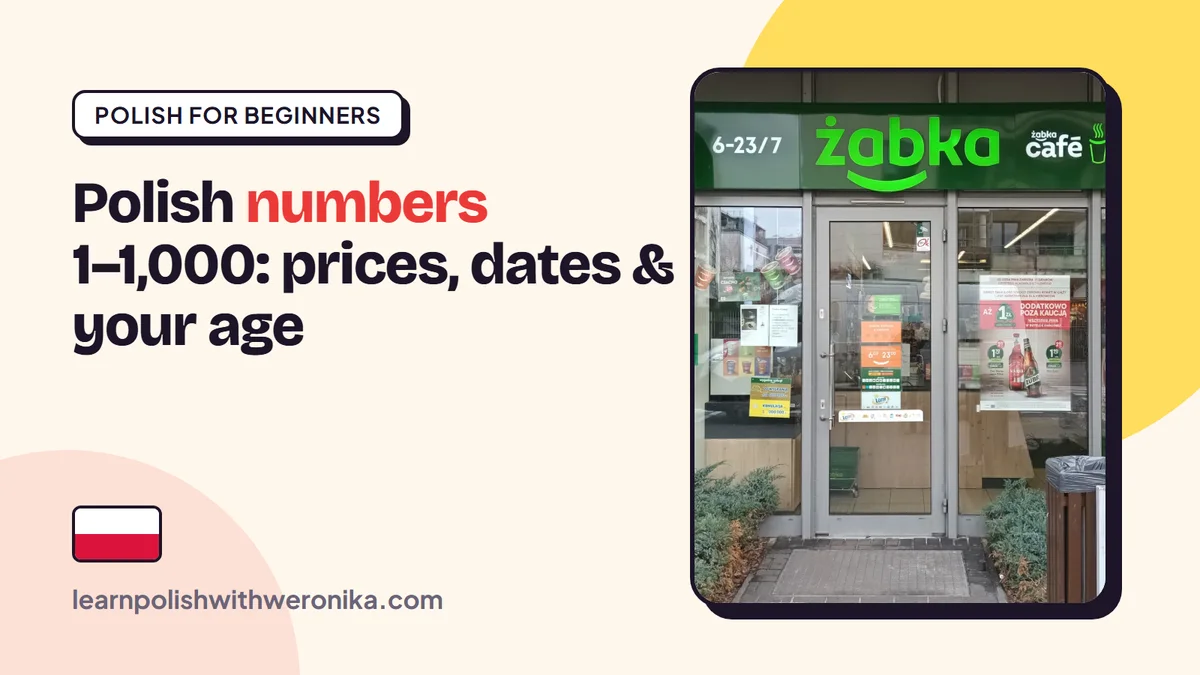
Numbers are everywhere in Poland. At the till in Żabka. On the bus timetable. When someone reads you their phone number – fast.
And they are the first thing that makes beginners panic. The cashier says dwanaście pięćdziesiąt, and you just hold out your card and hope.
Good news: Polish numbers follow clear patterns. Learn ten words and three endings, and you can say any number up to 1,000. In this guide, I will show you the numbers, then how to use them for prices, your age, phone numbers and dates.
In short
1–10 in Polish: jeden, dwa, trzy, cztery, pięć, sześć, siedem, osiem, dziewięć, dziesięć. Then three patterns: 11–19 end in -naście, 20–40 in -dzieści, 50–90 in -dziesiąt. For money: 1 złoty, 2–4 złote, 5+ złotych. The capital letters below show where to put the stress.
Polish numbers 1–10
Start here. Say them out loud – ten times today, ten times tomorrow.
| Number | Polish | Say it like |
|---|---|---|
| 0 | zero | ZEH-ro |
| 1 | jeden | YEH-den |
| 2 | dwa | dva |
| 3 | trzy | tshih |
| 4 | cztery | CHTEH-rih |
| 5 | pięć | pyench |
| 6 | sześć | sheshch |
| 7 | siedem | SHEH-dem |
| 8 | osiem | O-shem |
| 9 | dziewięć | JEH-vyench |
| 10 | dziesięć | JEH-shench |
Teacher’s tip: sześć (6) is the hardest one. Two different “sh” sounds in one short word. Don’t worry about perfect – Poles will understand you.
Polish numbers 11–19: the -naście pattern
All the teens end in -naście (NA-shcheh). That ending is always stressed.
| Number | Polish | Say it like |
|---|---|---|
| 11 | jedenaście | yeh-deh-NA-shcheh |
| 12 | dwanaście | dva-NA-shcheh |
| 13 | trzynaście | tshih-NA-shcheh |
| 14 | czternaście | chter-NA-shcheh |
| 15 | piętnaście | pyent-NA-shcheh |
| 16 | szesnaście | shes-NA-shcheh |
| 17 | siedemnaście | sheh-dem-NA-shcheh |
| 18 | osiemnaście | o-shem-NA-shcheh |
| 19 | dziewiętnaście | jeh-vyent-NA-shcheh |
Polish numbers 20–100: tens and how to combine them
Two endings: -dzieści for 20, 30 and 40, and -dziesiąt for 50 to 90.
| Number | Polish | Say it like |
|---|---|---|
| 20 | dwadzieścia | dva-JESH-cha |
| 30 | trzydzieści | tshih-JESH-chee |
| 40 | czterdzieści | chter-JESH-chee |
| 50 | pięćdziesiąt | pyen-JEH-shont |
| 60 | sześćdziesiąt | shesh-JEH-shont |
| 70 | siedemdziesiąt | sheh-dem-JEH-shont |
| 80 | osiemdziesiąt | o-shem-JEH-shont |
| 90 | dziewięćdziesiąt | jeh-vyen-JEH-shont |
| 100 | sto | sto |
To make 21, 35 or 99, just put the two numbers next to each other – like in English:
- 21 = dwadzieścia jeden
- 35 = trzydzieści pięć
- 99 = dziewięćdziesiąt dziewięć
Polish numbers 100–1,000 (and a million)
| Number | Polish | Say it like |
|---|---|---|
| 100 | sto | sto |
| 200 | dwieście | DVYESH-cheh |
| 300 | trzysta | TSHIH-sta |
| 400 | czterysta | chteh-RIH-sta |
| 500 | pięćset | PYENCH-set |
| 600 | sześćset | SHESH-set |
| 700 | siedemset | sheh-DEM-set |
| 800 | osiemset | o-SHEM-set |
| 900 | dziewięćset | jeh-VYENCH-set |
| 1,000 | tysiąc | TIH-shonts |
| 2,000 | dwa tysiące | dva tih-SHON-tseh |
| 5,000 | pięć tysięcy | pyench tih-SHEN-tsih |
| 1,000,000 | milion | MEE-lyon |
Big numbers work the same way: 245 = dwieście czterdzieści pięć. And notice tysiąc, tysiące, tysięcy – three forms again. You will see this pattern in the next section, with money.
Prices in Polish: złoty, złote or złotych?
This is where Polish surprises everyone. The word for the currency changes with the number:
| How many | Polish | Example |
|---|---|---|
| 1 | złoty (ZWO-tih) | jeden złoty |
| 2, 3, 4 (and 22–24, 32–34…) | złote (ZWO-teh) | trzy złote, dwadzieścia dwa złote |
| 5–21 (and 25–31…) | złotych (ZWO-tihkh) | pięć złotych, dwanaście złotych |
The small coins are grosze – 100 groszy make 1 złoty. And in real life, Poles keep it short. A price of 12.50 zł is just dwanaście pięćdziesiąt – twelve fifty.
| Polish | Say it like | English |
|---|---|---|
| Ile kosztuje? | EE-leh kosh-TOO-yeh | How much is it? |
| Ile kosztują? | EE-leh kosh-TOO-yom | How much are they? |
| Ile płacę? | EE-leh PWA-tseh | How much do I pay? |
| Kartą czy gotówką? | KAR-tom chih go-TOOF-kom | Card or cash? |
| Kartą, proszę. | KAR-tom PRO-sheh | By card, please. |
| Poproszę paragon. | po-PRO-sheh pa-RA-gon | The receipt, please. |
What you will really hear: the correct form is pięć złotych. But many Poles say pięć złoty in everyday speech. Now you know both – and you know which one to write.
Moving to Poland? Shopping, the pharmacy and the doctor are in my beginner course (A1) for life in Poland.
How to say your age in Polish
In Polish, you don’t “are” 30 – you “have” 30 years: Mam trzydzieści lat. And the word for “years” changes, just like złoty:
| Polish | Say it like | English |
|---|---|---|
| Ile masz lat? | EE-leh mash lat | How old are you? |
| Mam jeden rok. | mam YEH-den rok | I’m one. (1 → rok) |
| Mam dwadzieścia trzy lata. | mam dva-JESH-cha tshih LA-ta | I’m 23. (2–4, 22–24… → lata) |
| Mam trzydzieści pięć lat. | mam tshih-JESH-chee pyench lat | I’m 35. (5+ → lat) |
Teacher’s tip: asking a Polish grandma her age? Be polite: Ile pani ma lat? – or better, don’t ask at all. Same as everywhere.
Phone numbers in Polish
A Polish mobile number has nine digits. Poles usually split it into three groups of three – and many read each group as one number:
600 123 456 → sześćset, sto dwadzieścia trzy, czterysta pięćdziesiąt sześć.
Too fast? Ask for the digits one by one. Nobody will mind.
| Polish | Say it like | English |
|---|---|---|
| Jaki masz numer telefonu? | YA-kee mash NOO-mer teh-leh-FO-noo | What’s your phone number? |
| Możesz powtórzyć? | MO-zhesh pof-TOO-zhich | Can you repeat? |
| Wolniej, proszę. | VOL-nyey PRO-sheh | Slower, please. |
| Cyfra po cyfrze, proszę. | TSIF-ra po TSIF-sheh PRO-sheh | Digit by digit, please. |
Dates in Polish: “first”, “second”, “third”
For dates, Polish uses “first, second, third” – like English. Here are the ones you need most:
| Number | Polish | Say it like |
|---|---|---|
| 1st | pierwszy | PYERF-shih |
| 2nd | drugi | DROO-gee |
| 3rd | trzeci | TSHEH-chee |
| 4th | czwarty | CHFAR-tih |
| 5th | piąty | PYON-tih |
| 10th | dziesiąty | jeh-SHON-tih |
| 20th | dwudziesty | dvoo-JES-tih |
Two everyday sentences:
- Którego dzisiaj jest? (ktoo-REH-go JEE-shy yest) – What’s the date today?
- Dzisiaj jest ósmy listopada. (JEE-shy yest OOS-mih lee-sto-PA-da) – Today is the 8th of November.
The most famous date in Poland? Dwudziesty czwarty grudnia – the 24th of December, Christmas Eve. Here is how Poles celebrate Wigilia.
How to remember Polish numbers
- Learn 1–10 firstEverything else is built from them.
- Learn the three endings-naście (11–19), -dzieści (20–40), -dziesiąt (50–90).
- Say prices out loudIn the shop, read every price tag in Polish – in your head.
- Count anythingStairs, push-ups, the seconds at a red light.
- Use them in real sentencesA number alone is easy. Poproszę dwa bilety – two tickets, please – is real Polish.
Free PDF – 50 basic Polish words. The words beginners need first, on one page. Get the free PDF
Numbers are one lesson. Real life in Polish is the next step – ordering at the counter, paying, small talk with the cashier. That is exactly what my beginner course (A1) starts with: short video lessons, explained in English, step by step.
Rated 4.9 out of 5 from 102 reviews on Trustpilot.
Not sure of your level? Take the free Polish level test. And for the first words beyond numbers, see the basic Polish words every beginner should know. Powodzenia! – good luck!
Frequently Asked Questions
How do you count to 10 in Polish?
jeden, dwa, trzy, cztery, pięć, sześć, siedem, osiem, dziewięć, dziesięć (YEH-den, dva, tshih, CHTEH-rih, pyench, sheshch, SHEH-dem, O-shem, JEH-vyench, JEH-shench).
Why are there three words for złoty?
The word changes with the number. 1 złoty, 2–4 złote, 5 and more złotych. The same rule works for many Polish nouns, like years: 1 rok, 2–4 lata, 5+ lat.
How do you say prices in Polish?
Say the złoty, then the grosze: 12.50 zł is dwanaście złotych pięćdziesiąt groszy. In a shop you will mostly hear just dwanaście pięćdziesiąt – twelve fifty.
How do you ask “How much is it?” in Polish?
Ile kosztuje? (EE-leh kosh-TOO-yeh) for one thing, Ile kosztują? for more than one. At the till you can ask Ile płacę? – how much do I pay?
How do you say your age in Polish?
Mam trzydzieści lat – literally “I have thirty years”. Ask someone with Ile masz lat? – how old are you?
Is it hard to learn Polish numbers?
1–10 take an evening. After that it is patterns: 11–19 end in -naście, 20–40 in -dzieści, 50–90 in -dziesiąt. The tricky part is the word after the number – that comes with practice.
From numbers to real conversations
Shop, pay and chat in Polish
My beginner course (A1) starts from zero: numbers at the deli counter, shopping, introducing yourself and small talk. Short video lessons, explained in English, step by step – with exercises after every lesson and an app. One-time payment, lifetime access and a 14-day money-back guarantee.